Journal · Technique
What your springs are telling you
By Mia, founder · 12 March 2026 · 5 min read
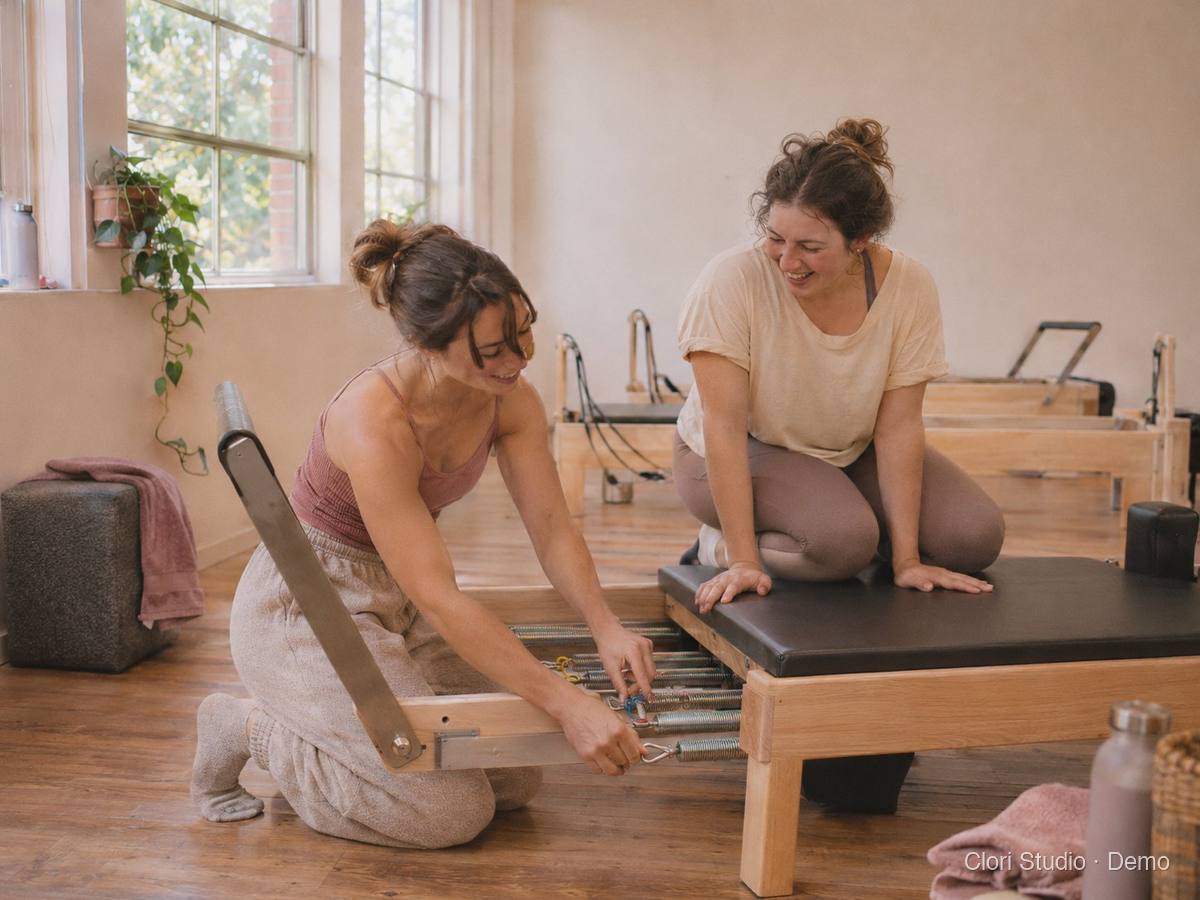
Heavier is not always harder. Here is what the colours on the reformer mean, and why your teacher keeps changing them.
If you have taken more than one reformer class, you will have noticed that your teacher changes the springs a lot. Sometimes it feels like they are making things easier. Sometimes it feels like the exact opposite. Both are true, and once you understand why, the whole class starts to make more sense.
Springs are information, not a score
Each spring on the reformer has a colour, and each colour has a different tension. On most machines, heavier springs make the carriage harder to push away and slower to come back. Lighter springs make it easier to move but much harder to control. That second part surprises people: a light spring gives you less support, so your deep core and stabilising muscles have to do more of the work.
This is why “more springs” does not mean “more advanced”. A heavy spring setting can be the gentle option for one exercise and the strength option for another. Your teacher is choosing the setting that gives the work to the muscles the exercise is meant for.
What heavy springs are good for
Heavier settings are useful for big, strong muscle groups such as the legs and glutes. Footwork, the first series in most classes, often starts on a heavier setting so that you can push with control and feel your whole foot on the bar. Heavier springs also give a steadier, more predictable carriage, which is reassuring in the first few classes.
If your legs are shaking during footwork on a heavy setting, that is normal. Slow the movement down rather than rushing to finish the count.
“A light spring is not the easy option. It is the honest one: it shows you exactly where your control runs out.”
What light springs are good for
Light settings are where the reformer gets interesting. Exercises like the long stretch, knee stretches and most arm work on a single light spring ask you to stabilise the carriage instead of letting the spring do it for you. You will feel your abdominals, the back of your shoulders and the small muscles around your hips switch on.
Because the carriage moves so freely, light springs also show up any wobble. That is useful feedback, not a sign that you are doing it wrong. Make the movement smaller, keep your breath steady and let the control build over a few weeks.
When to ask for a change
You are always allowed to ask for a different setting. Tell your teacher if a spring feels so heavy that you are straining your neck or holding your breath, or so light that you cannot keep the carriage still at the start of an exercise. Both are signs that the setting is not right for you today.
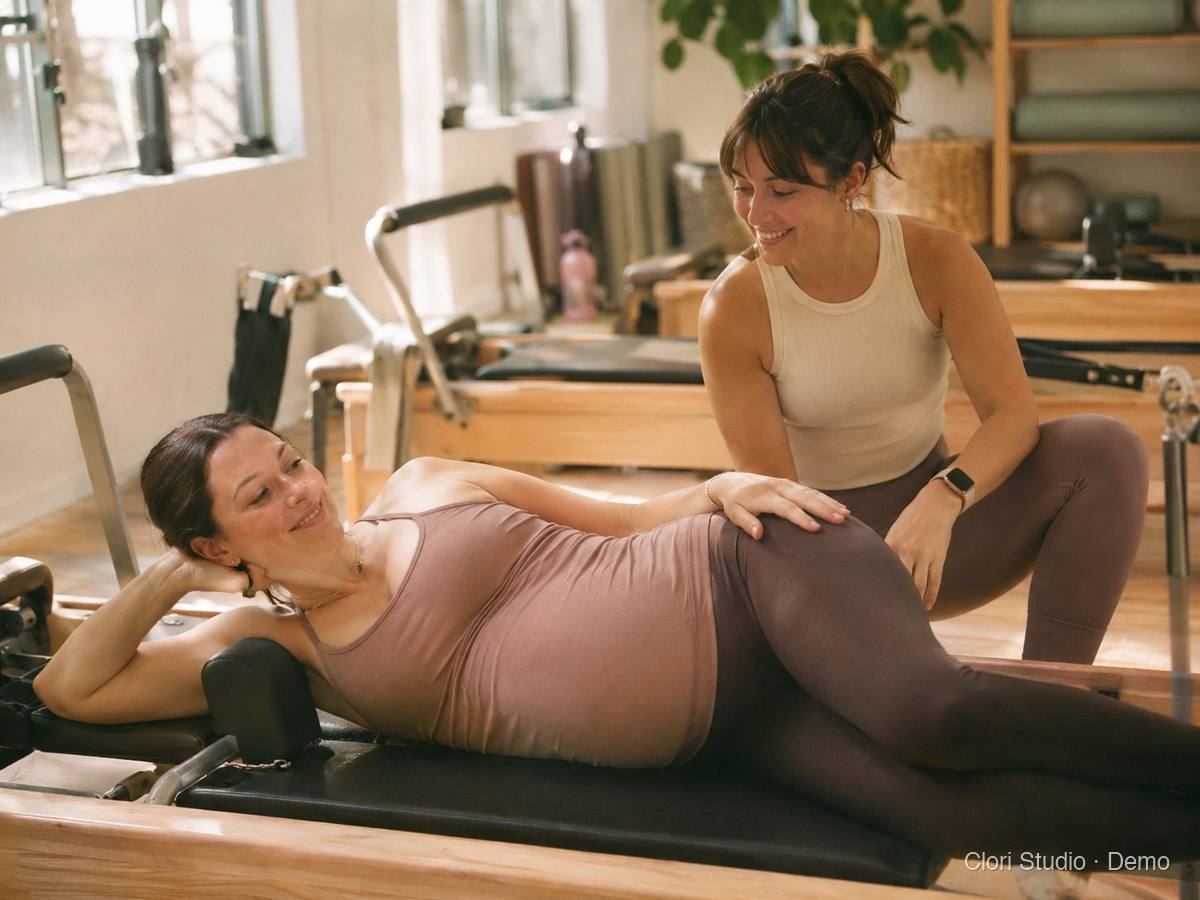
Days are different too. After a poor night’s sleep, during your period, in pregnancy or when you are coming back from an injury, a different setting may serve you better than the one you used last week. A good class leaves room for that.
Springs and your breath
One more thing to notice: your breath changes with the spring. On a heavy setting, most people breathe out as they push the carriage away, because that is the hardest part. On a light setting, the hard part is often the return, when you have to stop the carriage from snapping back. Try breathing out as you control the return instead. It is a small change, but it often turns a wobbly exercise into a steady one.
If you notice yourself holding your breath, that is usually a sign the setting or the range of movement is too much for you right now. Make it smaller, or ask for a change, and let the breath lead.
A simple way to remember it
Heavy springs help you push. Light springs ask you to hold. Most exercises sit somewhere in between, and the right setting is the one that lets you move with control from the first repetition to the last.
Next time your teacher reaches for the springs, notice what changes in your body. Over time you will start to predict what they are going to say, and that is when the reformer begins to feel like yours.